Most homeowners start thinking about a pool when the Texas heat hits 100 degrees in May. But if you want a pool that lasts thirty years without cracking or leaking, you have to plan for the soil and the site long before the first shovel hits the ground.
Why Gunite is the Right Choice for Seguin Backyards
When looking at seguin pool design & construction, you generally have three choices: vinyl, fiberglass, or gunite. For a permanent, custom installation in Guadalupe County, gunite—a mixture of cement and sand sprayed at high pressure—is the professional standard.
Fiberglass shells are pre-made. They limit your shape and depth options. Vinyl liners tear and need replacing every few years. Gunite is different because it is poured and shaped on-site. This allows for exact customization to fit the specific slope of your yard or the placement of your existing patio.
Beyond the look, gunite handles the Texas climate better. It is structurally denser and more durable than other materials. When you invest in a custom concrete pool, you are building a permanent fixture that adds tangible value to your property, rather than installing a temporary product.
The Process of Seguin Pool Design & Construction
A quality build follows a specific sequence. Skipping steps or rushing the timeline leads to structural failures down the road. Here is how a professional gunite project actually works.
Site Analysis and Layout We start by looking at your yard's grade and drainage patterns. In the Seguin area, we deal with varying soil types—from heavy clay to rocky patches. We mark out the pool's perimeter and ensure there is enough clearance from fence lines and utility easements.
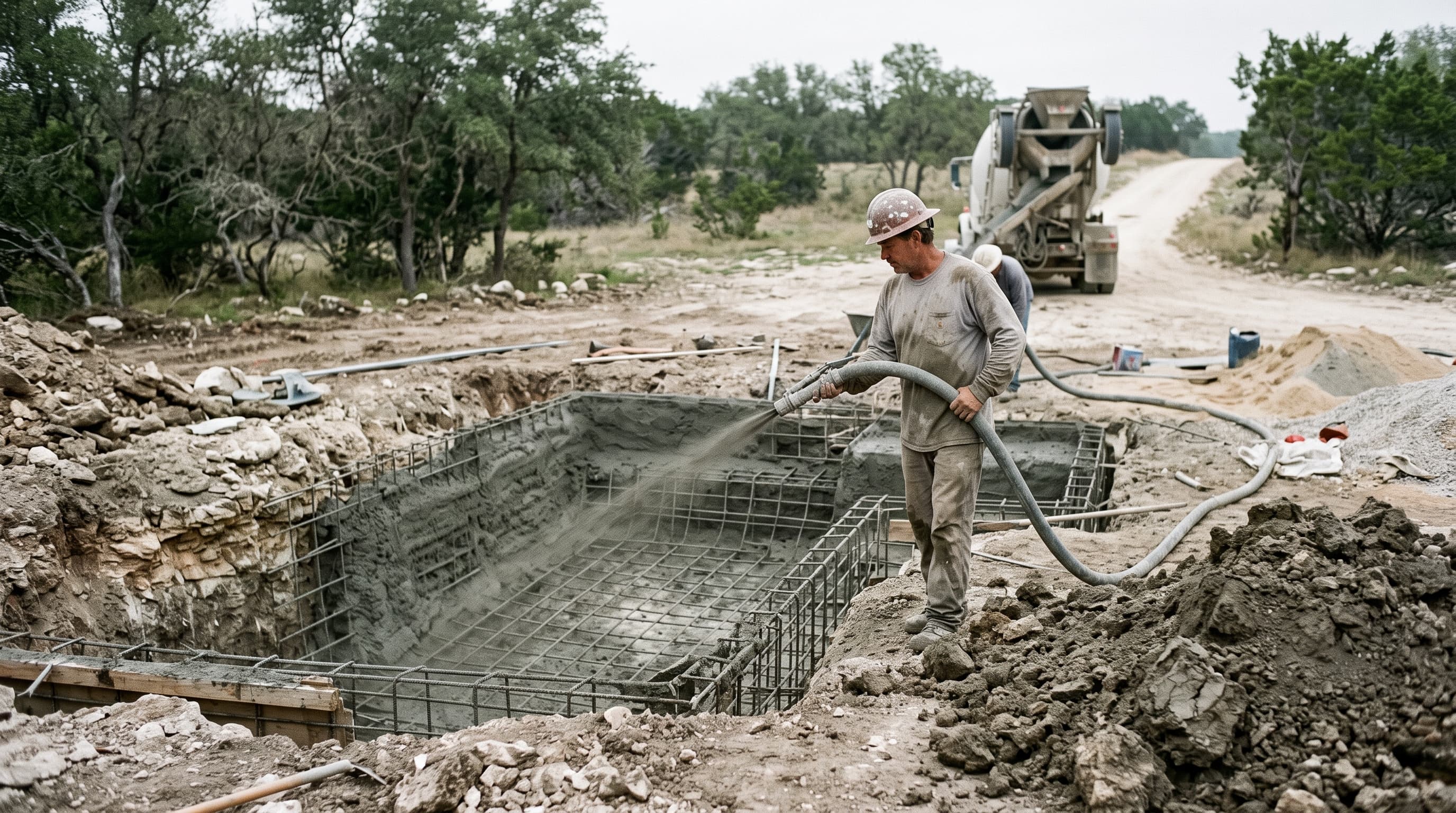
Excavation and Steel Reinforcement Once the layout is set, we dig the hole. This isn't just about depth; it's about precision. After digging, we install a cage of steel rebar. This skeleton provides the structural integrity needed to prevent the pool from shifting or cracking under the weight of thousands of gallons of water.
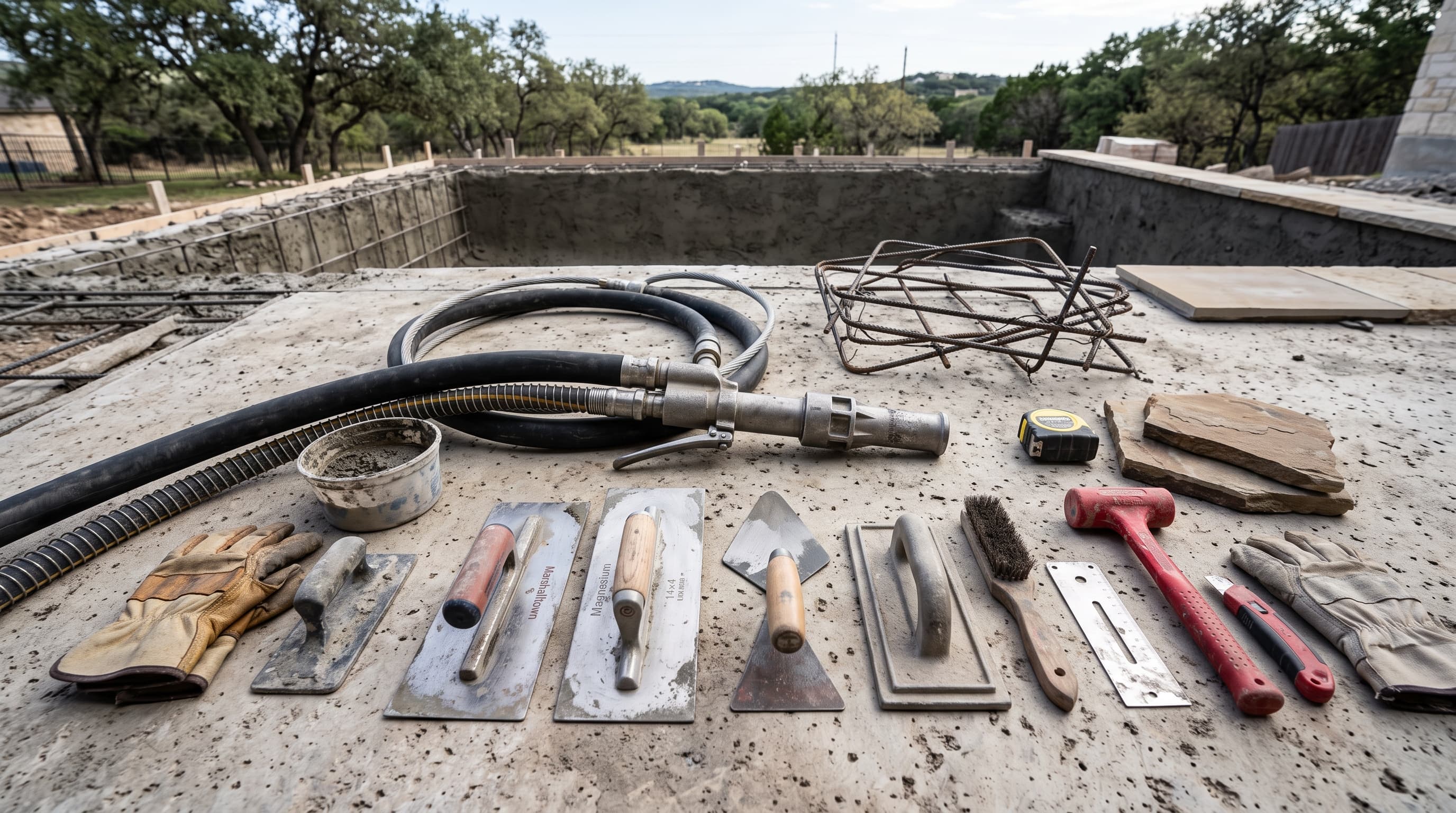
Plumbing and Gunite Application We run the plumbing lines for the filter, pump, and cleaners before the shell is poured. Then comes the gunite. We spray the concrete mixture over the steel cage to create the walls and floor. This shell cures over several weeks, during which we may use a hose to keep it moist—a process called curing—to ensure maximum strength.
Finishing and Decking The final step is the interior finish (plaster, pebble, or tile) and the surrounding deck. The decking must be graded correctly so rainwater flows away from the pool and the house, preventing erosion around the pool shell.
Solving Local Soil and Drainage Issues
Building in the Texas Hill Country and the Seguin plains requires an understanding of local geology. Many yards in this region have expansive clay soil. This type of soil swells when wet and shrinks when dry, which can put immense pressure on a pool shell.
To counter this, we focus on two things: steel density and drainage. A reinforced steel cage keeps the pool rigid against soil movement. More importantly, we ensure the surrounding landscape is graded to move water away from the structure. If water pools around the edge of your concrete deck, it will eventually undermine the foundation.
We also look at the water table. Depending on where you are in Guadalupe County, we may need to implement specific drainage solutions or sump pumps during construction to keep the hole dry while the gunite cures.
Features That Make Sense for the Texas Climate
A pool is more than just a hole full of water. To make it functional for a Texas summer, certain design choices provide more value than others.
Tanning Ledges (Baja Shelves) These are shallow areas—usually 6 to 12 inches deep—where you can put lounge chairs or let small children play. In the peak of July, these ledges allow you to stay cool without being fully submerged.
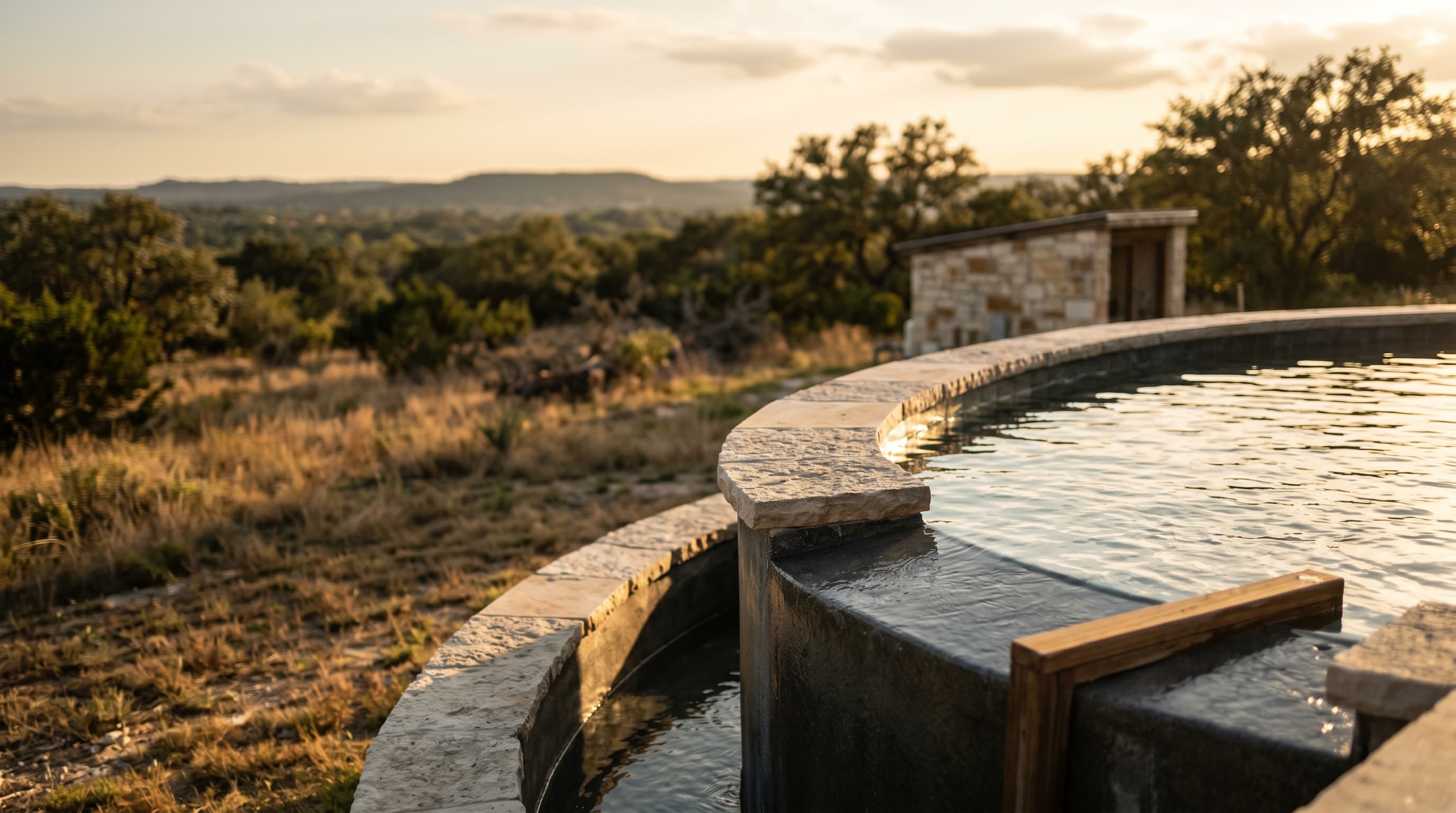
Integrated Spas Adding a raised spa allows for year-round use. When the temperature drops in December, the spa becomes the primary feature. We typically design these to overflow into the main pool, creating a visual waterfall effect.
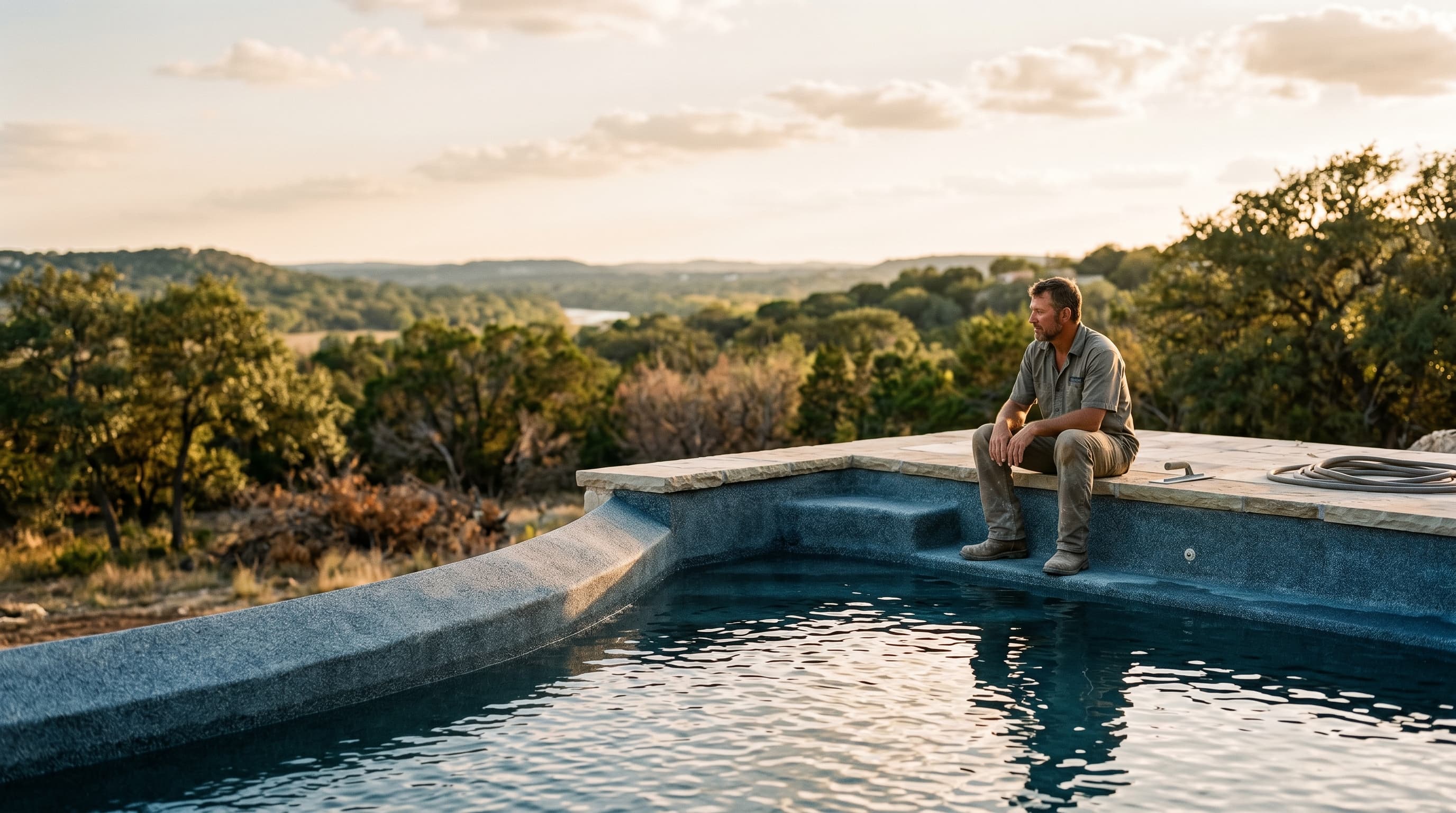
Pebble Finishes over Standard Plaster While white plaster is traditional, pebble finishes are far more durable. They resist staining and scrubbing better than plain plaster and provide a natural look that fits the Hill Country aesthetic. They also tend to hold up better against the harsh chemicals needed to keep water clear in 105-degree weather.
Automatic Covers In Seguin, we deal with heavy wind and debris. An automatic cover keeps the pool clean, reduces evaporation, and provides a safety barrier for kids and pets. It is one of the few add-ons that pays for itself in reduced chemical costs and cleaning time.
What to do next
If you are planning a build, don't start with the aesthetics. Start with the logistics:
- * Locate your property lines: Get a current survey so you know exactly where you can build.
- * Identify utility lines: Call 811 or check your plat to ensure you aren't building over a gas or water main.
- * Determine your budget: Decide if you want a basic lap pool or a full resort-style backyard with an integrated spa and outdoor kitchen.
- * Check your drainage: Walk your yard during a heavy rain to see where water naturally pools; this is critical information for your builder.
Let's talk about your project
Building a custom pool is a big investment, and doing it wrong is expensive. If you want a straightforward conversation about what will work for your specific lot in Seguin or the surrounding area, we are happy to help. We don't do high-pressure sales pitches—just practical advice on how to build a pool that lasts. Reach out to us at Turner Custom Pools and let's see if we're the right fit for your backyard.