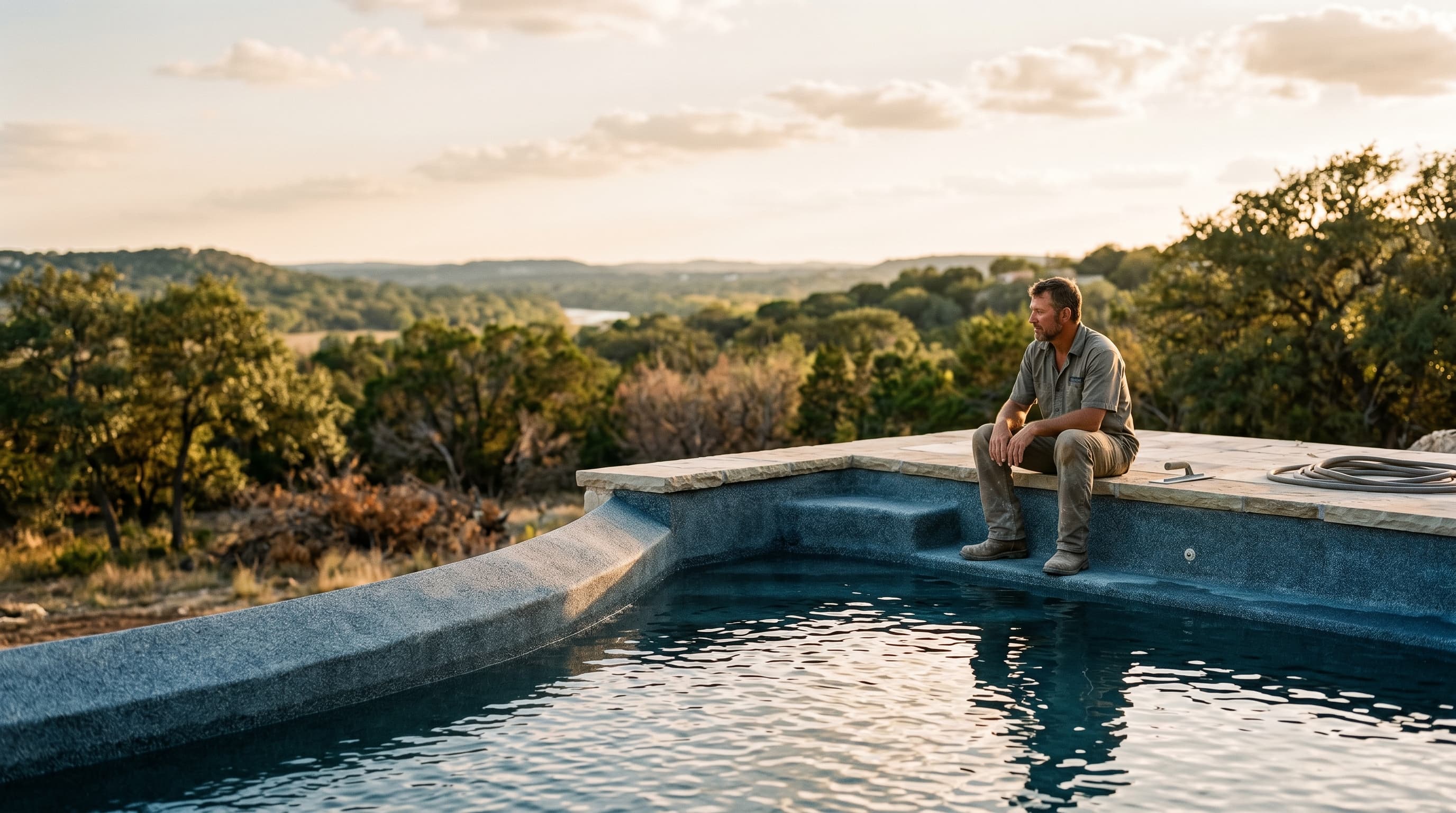
A custom gunite pool is the most significant structural addition you can make to your home. When it is done right, it lasts for generations; when it is rushed or shortcuts are taken with the steel and shell, it becomes a liability.
The Skeleton: Steel and Gunite
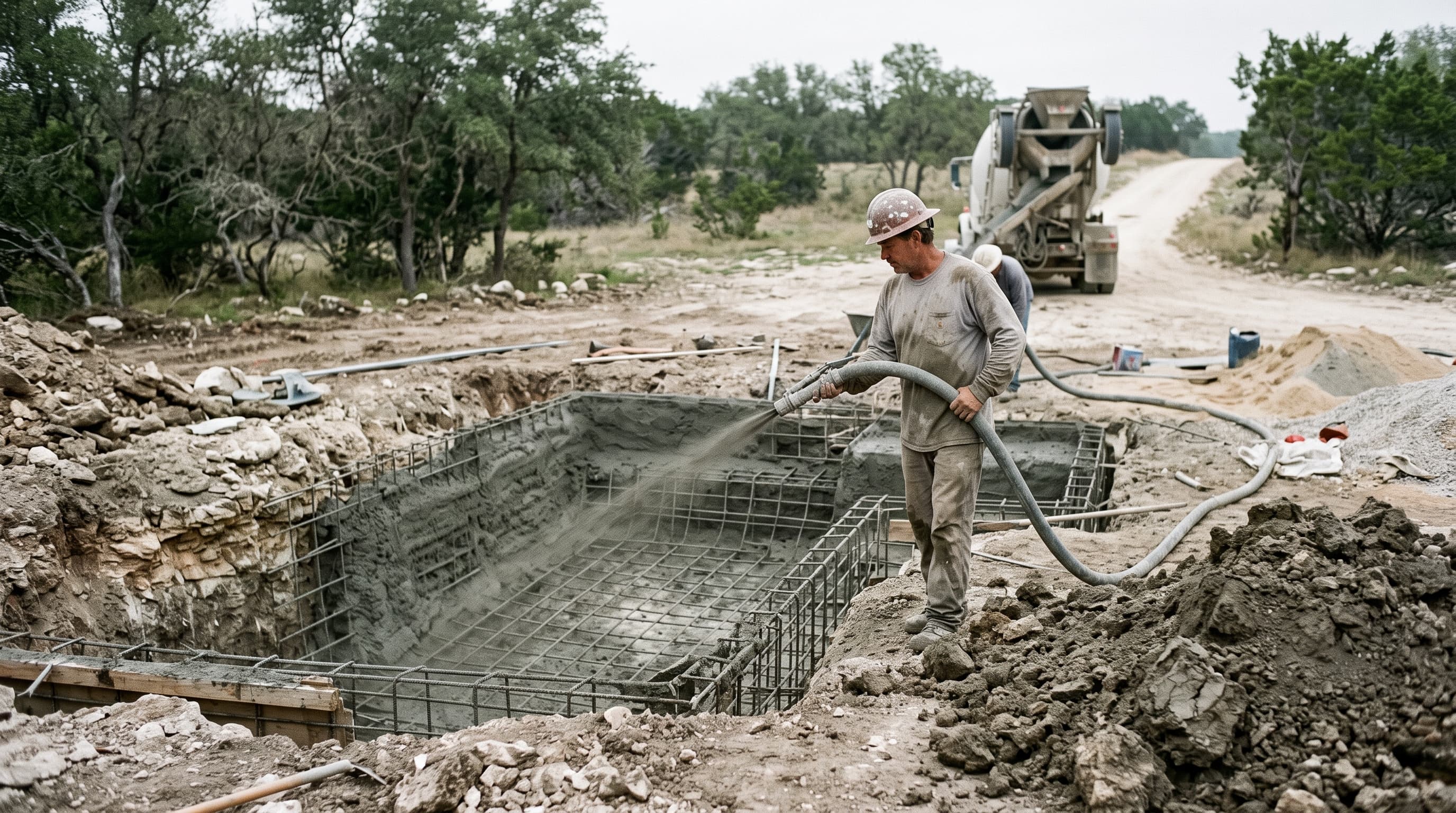
The longevity of a pool depends entirely on what happens before the water goes in. In Seguin, we deal with shifting soils that can put immense pressure on a pool shell. A professional build starts with a rigorous rebar grid. This steel skeleton provides the tensile strength needed to resist the weight of the earth pushing against the walls.
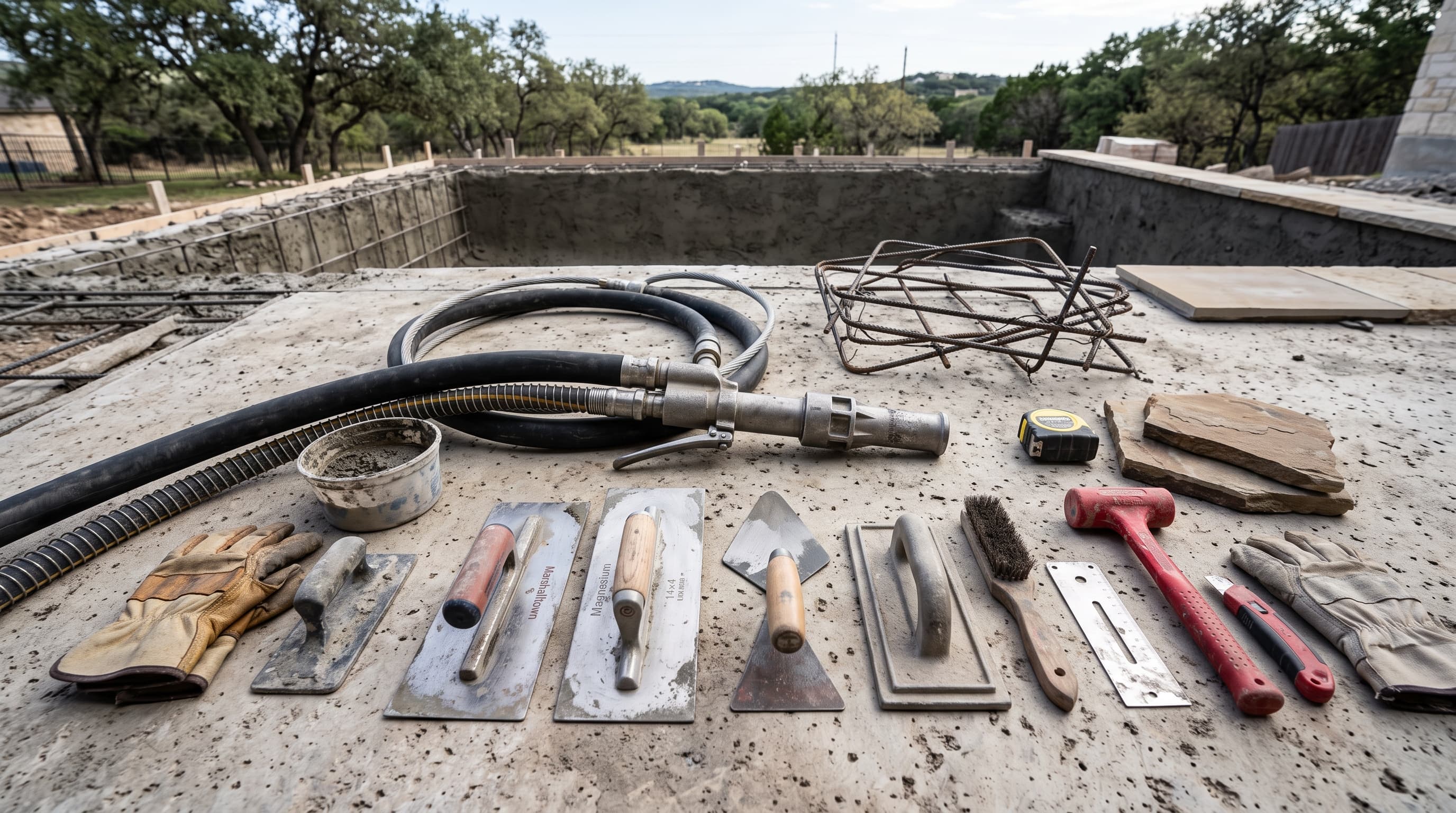
Once the steel is tied and inspected, we shoot the gunite. Gunite is not just poured concrete. It is a mixture of cement, sand, and aggregate projected through a high-pressure hose. This process compacts the material as it hits the forms, creating a denser, stronger shell than traditional poured concrete. If the gunite is shot too fast or not compacted properly, you get voids (air pockets) that can lead to structural cracks over time. A quality build focuses on the density of the shell to ensure the pool remains watertight for decades.
Managing Guadalupe County Soil and Drainage
Building in Seguin and across the Hill Country requires an understanding of local geology. We often deal with expansive clay soils that swell when wet and shrink when dry. This movement can shift a pool shell if the foundation isn't handled correctly.
Proper drainage is where many builds fail. If water pools around the perimeter of the shell during a heavy Texas rain, it creates hydrostatic pressure. This pressure can literally lift a pool out of the ground or cause the floor to crack. We implement specific drainage solutions (such as French drains or graded slopes) to move water away from the structure. The goal is to keep the soil moisture consistent around the shell so the pool stays exactly where we put it.
Choosing the Right Finish and Coping
The interior finish is what you see, but it also protects the gunite shell. While white plaster is a classic choice, many homeowners in the Hill Country are moving toward pebble finishes. Pebble finishes are more durable, resist staining better than smooth plaster, and handle the intense Texas UV rays without fading.
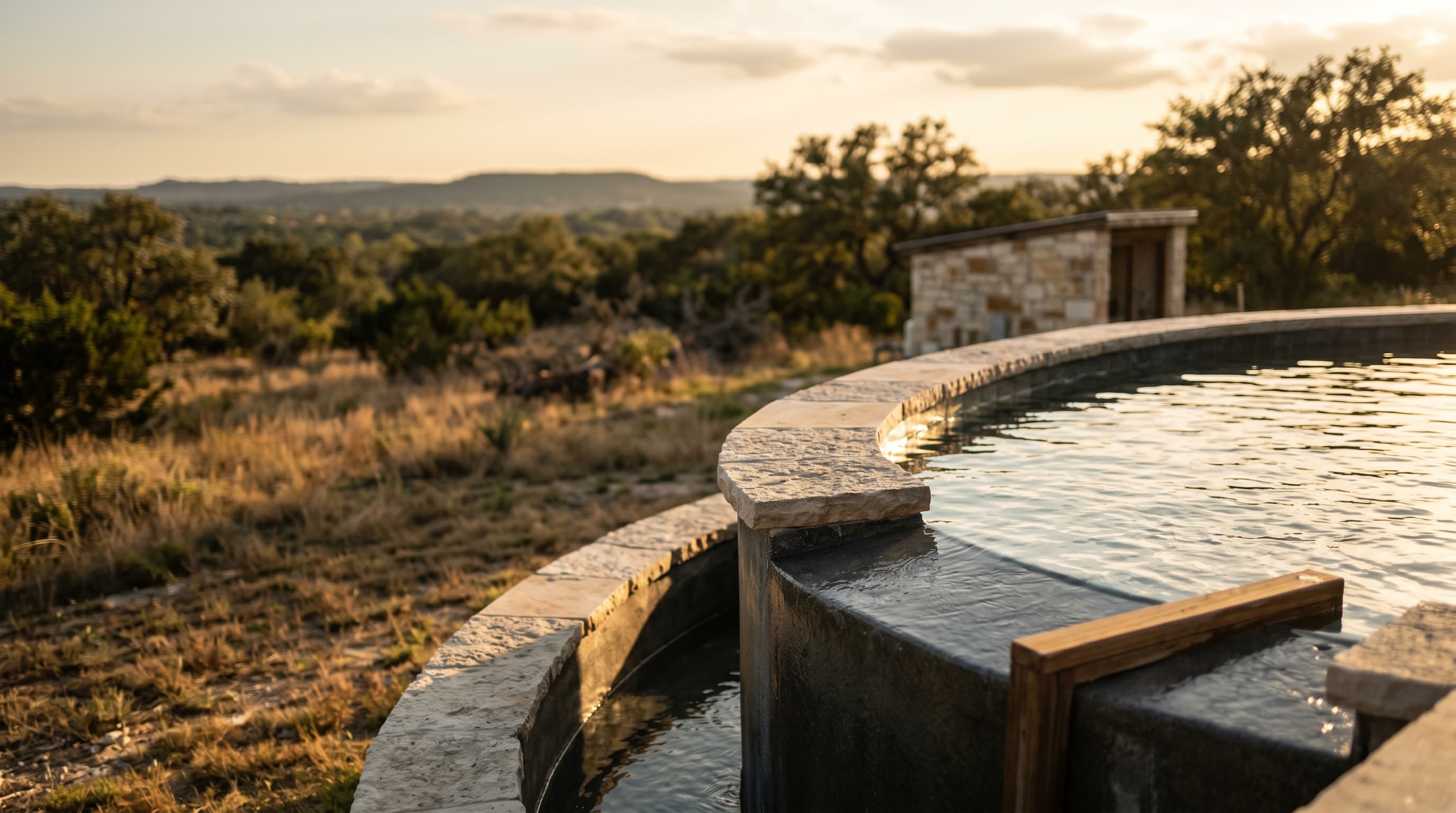
Coping (the edge of the pool) serves as the transition between the water and the deck. Whether you choose travertine, flagstone, or pre-cast concrete, the installation must be precise. The coping should have a slight outward pitch to prevent rainwater from running directly into the pool, which helps maintain chemical balance and prevents debris buildup. We focus on the intersection of the coping and the shell to ensure there are no gaps where water can seep behind the finish.
The Mechanicals: Filtration and Automation
The equipment pad is the heart of the pool. A common mistake in custom builds is undersizing the pump or using a filter that cannot handle the local water chemistry. We prioritize high-efficiency variable speed pumps. These reduce energy costs and run quieter, which is essential if your equipment pad is near a patio or bedroom window.
Automation has changed how people use their pools. Instead of walking to the equipment pad to turn a valve or flip a switch, modern systems allow you to control heating, lighting, and filtration from a phone. This isn't about luxury; it is about maintenance. When it is easy to run the cleaner or adjust the heat, homeowners are more likely to keep the pool in top condition. We install heavy-duty Schedule 40 PVC piping and ensure all lines are pressure-tested before the deck is poured to eliminate the risk of underground leaks.
What to do next
If you are planning a build, focus on these technical requirements before discussing colors or shapes:
- * Ask for the specific rebar schedule and gunite thickness planned for your soil type.
- * Verify the drainage plan to ensure water moves away from the pool shell.
- * Compare pebble finishes against standard plaster for long-term durability in the Texas sun.
- * Confirm that variable speed pumps are being used to lower monthly electricity costs.
If you want a backyard built with an emphasis on structural integrity and craft, we should talk. We build custom gunite pools across Seguin and New Braunfels that are designed to handle the Texas climate. Reach out to Turner Custom Pools to discuss your project.