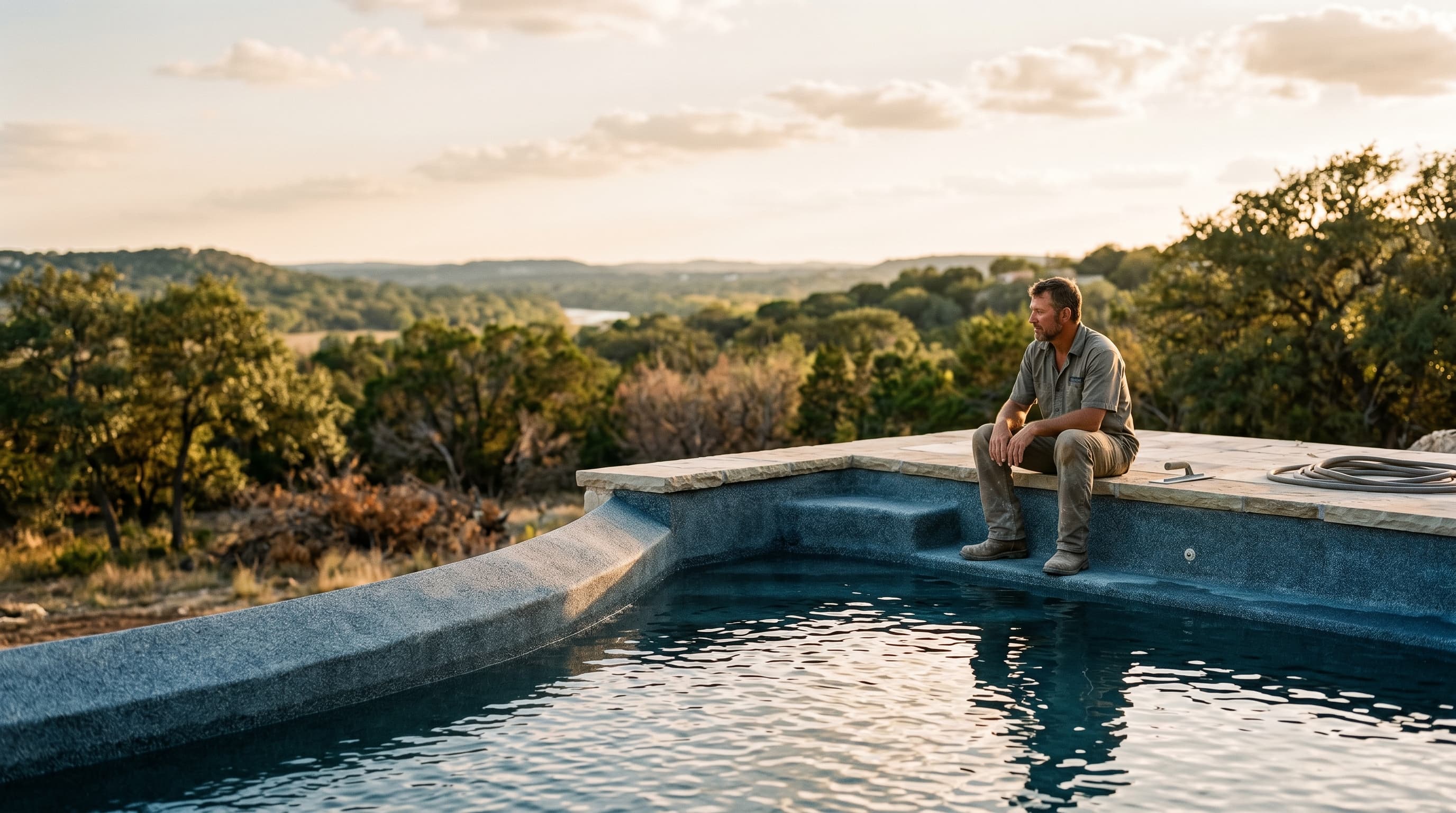
Building a pool between New Braunfels and Fredericksburg is not the same as building one in a flat suburban lot. The rocky terrain and steep slopes of this region require specific engineering to ensure the shell doesn't crack and the yard doesn't wash away during a flash flood.
Managing Limestone and Rocky Soil
The defining characteristic of the Texas Hill Country is the limestone. Depending on where your property sits—whether it's in Boerne or out toward Seguin—you might hit solid rock three feet down, or you might find pockets of unstable caliche.
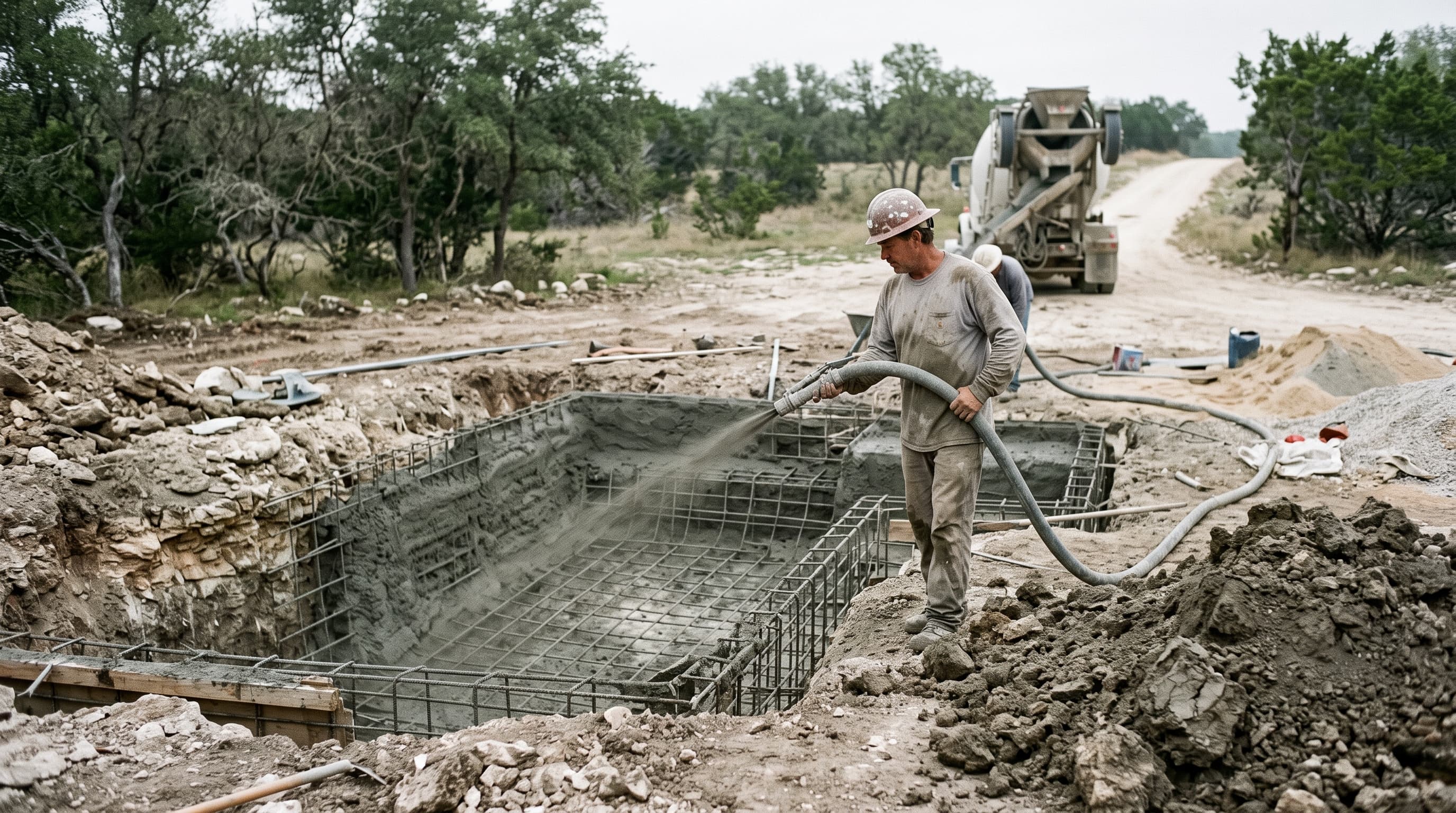
For custom pools in the Texas Hill Country, gunite is the only practical choice. Unlike pre-formed fiberglass shells that require a perfectly flat, sandy base, gunite is sprayed concrete. It allows us to build the pool into the existing grade of the land. If we hit a limestone shelf, we can carve into it or adjust the floor depth without compromising the structural integrity of the pool.
When you plan your layout, consider where the rock is heaviest. Excavating through solid limestone increases costs and time. A sharp builder will look at your topography and suggest a placement that minimizes unnecessary blasting or heavy hammering while still giving you the view you want.
Engineering for Slopes and Drainage
Many properties in the Hill Country feature significant elevation changes. While a slope makes excavation more complex, it provides an opportunity for designs that aren't possible on flat land.
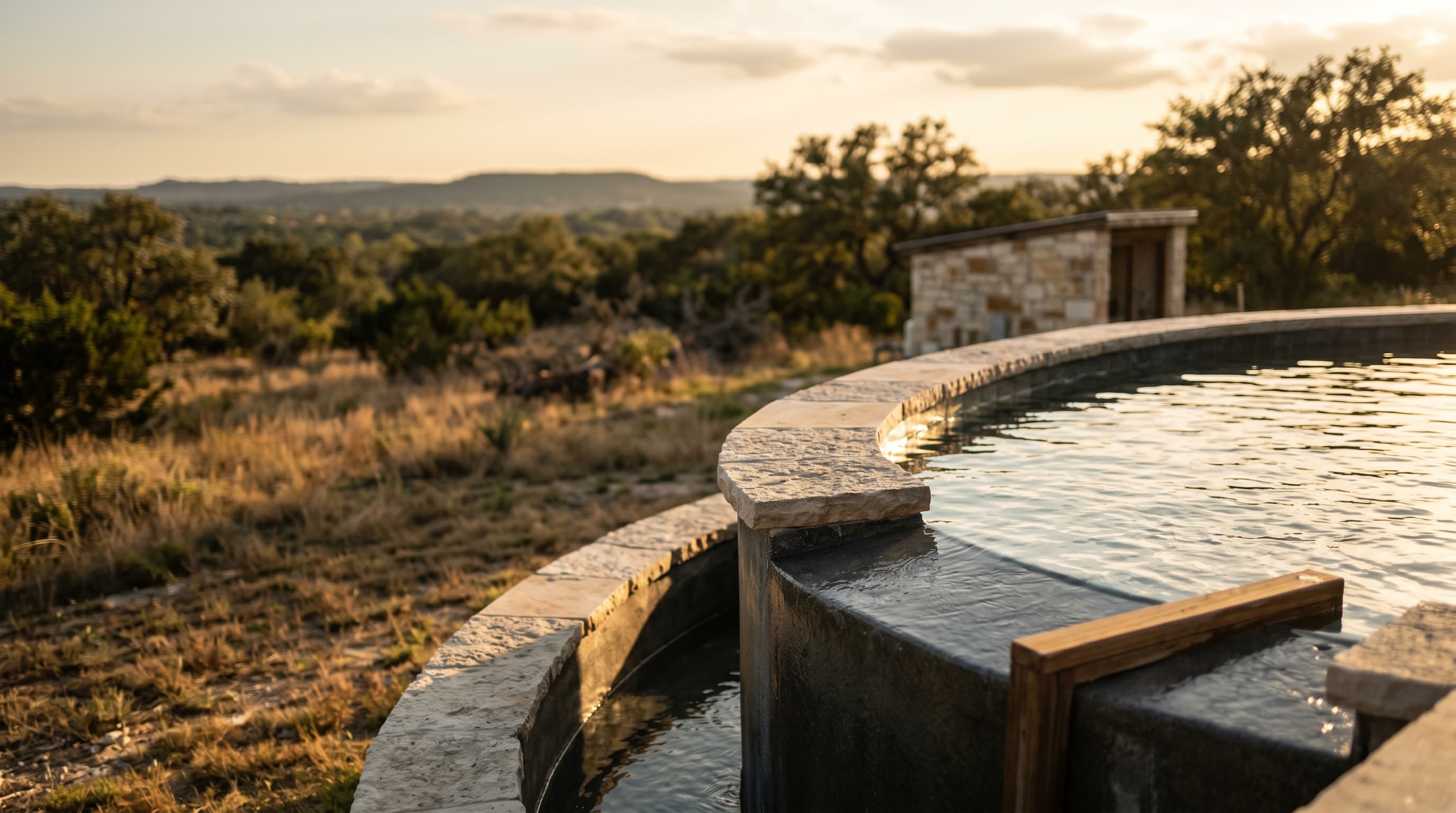
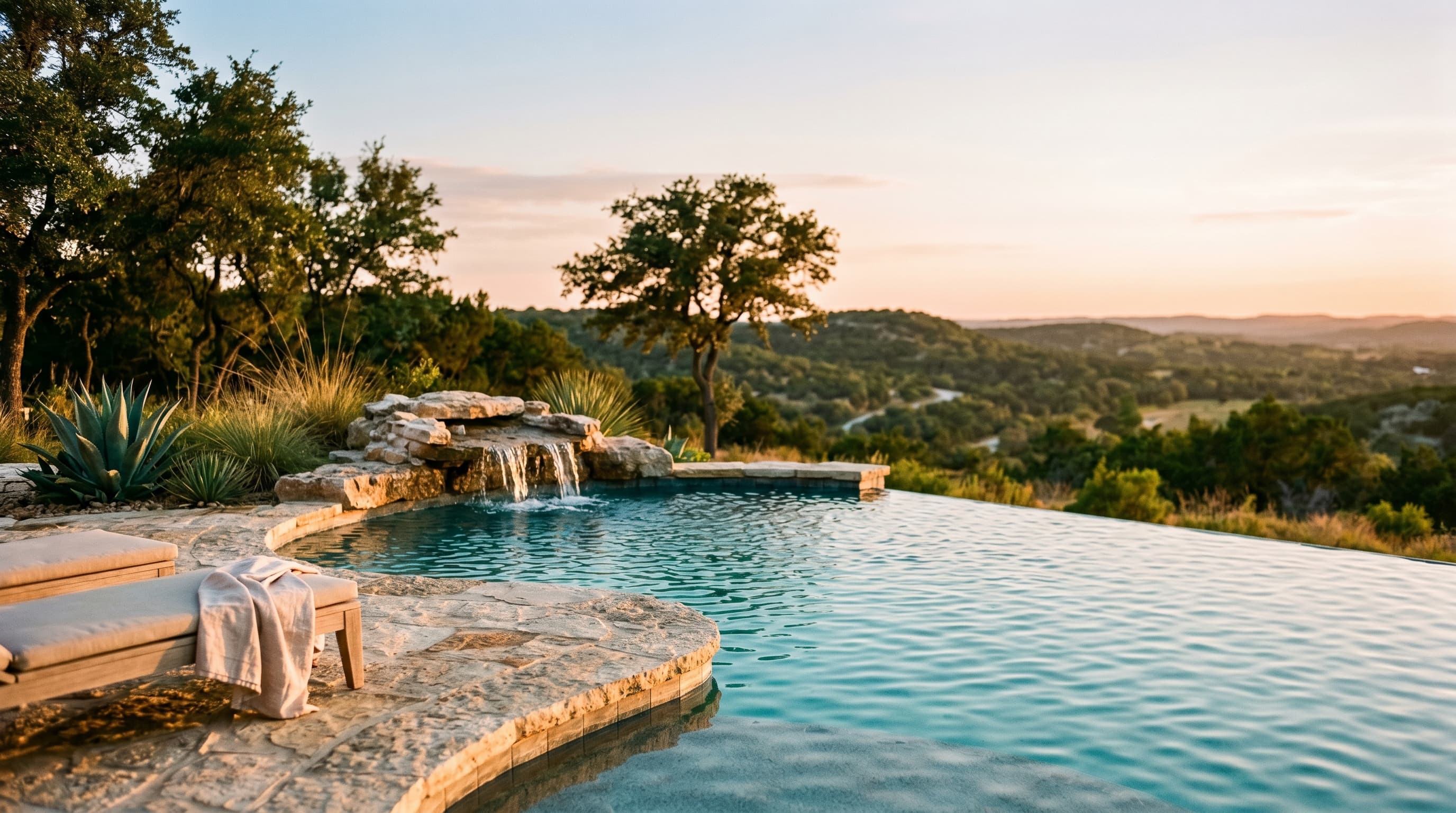
Infinity edges are popular here because they blend the pool into the horizon. However, these require a catchment basin (a surge tank) to manage water overflow. If you have a steep grade, you must also plan for drainage. A pool acts like a giant bowl; if you don't divert rainwater away from the shell and toward a proper drainage system, you risk hydrostatic pressure pushing the pool out of the ground or causing slope failure around your patio.
We focus on grading the surrounding land to ensure water moves away from the house and the pool. This means installing French drains or creating swales that direct runoff into natural areas of the property.
Beating the Texas Heat
The sun in Central Texas is relentless, and it affects more than just your skin. It affects your water chemistry and your energy bill.
To keep a pool usable in August, you need to think about thermal mass and shading. Deeper pools stay cooler longer, but strategic landscaping is the most effective tool. Planting native oaks or installing a permanent pavilion on the south side of the pool provides natural cooling without blocking the view.
We also recommend salt systems for this region. They are easier to maintain than traditional chlorine setups and provide a softer feel on the skin, which is preferable when you're spending six hours a day in the water during July. If you want a truly cool swim, we can integrate chillers or high-volume circulation systems that prevent the water from stagnating and heating up in the shallow end.
Why Gunite Wins in the Hill Country
Homeowners often ask about vinyl liners or fiberglass options. In most parts of the country, those are viable. In the Texas Hill Country, they rarely are.
Fiberglass shells are shipped on a truck. If your backyard is accessed by a narrow, winding drive or has a steep incline, getting a massive pre-formed shell into position is often impossible. Furthermore, fiberglass cannot be customized to fit the exact contours of a rocky hillside.
Gunite provides three specific advantages:
- 1. Custom Geometry: We can shape the pool to wrap around existing cedar trees or follow the natural curve of your land.
- 2. Durability: A reinforced concrete shell handles the shifting soils and temperature swings of Central Texas better than any other material.
- 3. Finish Options: From pebble finishes to quartz, gunite allows for surfaces that resist algae growth and stand up to the harsh UV rays of the Texas sun.
What to do next
If you are planning a build, start with these steps before calling a contractor:
- * Get a survey: Know exactly where your property lines are and identify any easements or utility lines.
- * Check your water source: Ensure your well or city connection can handle the initial fill and long-term topping off.
- * Map your shade: Observe where the sun hits your yard at 10 AM, 2 PM, and 6 PM to determine the best pool placement.
- * Define your primary use: Decide if this is for lap swimming, kids' play, or a quiet spot for adults to lounge.
If you have a piece of land in the Hill Country and aren't sure how to handle the terrain, we can help you figure out a plan that works with the land rather than fighting against it. Reach out to Turner Custom Pools to start a conversation about your project.