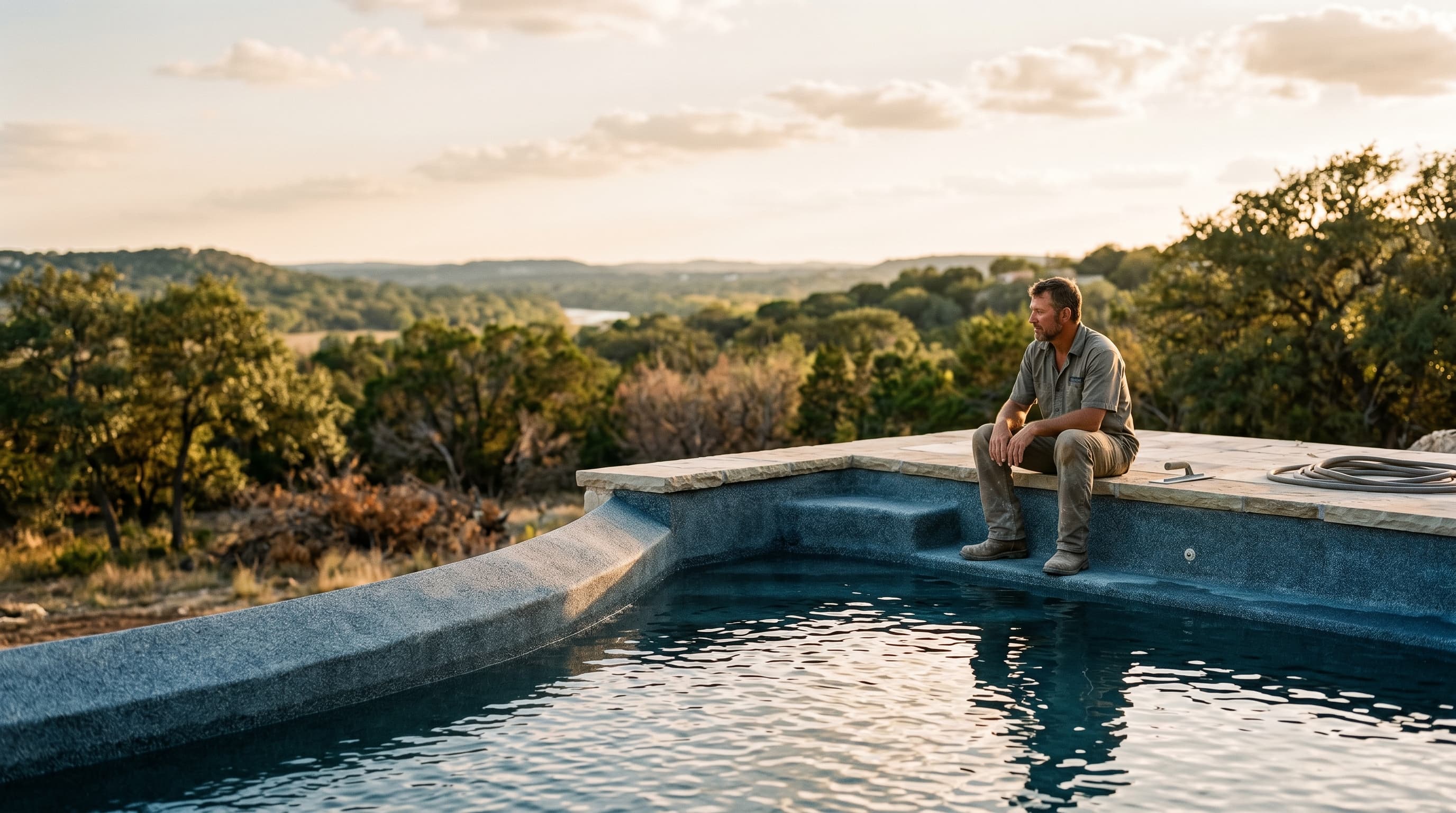
A homeowner in Seguin recently called us about a lot they just bought in Guadalupe County. The yard looked perfect on paper, but once they started digging for a fence, they found the reality of the region: thick, heavy black clay that sticks to everything and shifts with every rain. They were leaning toward a fiberglass pool because the timeline was shorter and the initial price tag was lower. They wanted a quick win before summer hit.
The allure of the pre-formed shell
The conversation started with the appeal of fiberglass. For a homeowner who is price-sensitive, the pitch for fiberglass is strong. You buy a pre-manufactured shell, a crane drops it into a hole, and you are swimming in a fraction of the time it takes to build from scratch. It feels like buying a product rather than commissioning a piece of construction.
In many parts of the country, this works well. But Central Texas is not most places. In Seguin, New Braunfels, and across Comal and Bexar counties, we deal with expansive clay soil. This soil acts like a sponge. When it rains, the clay absorbs water and expands. During a Texas drought, it shrinks and pulls away from structures.
When you drop a rigid fiberglass shell into that shifting earth, you are placing a plastic tub into a moving foundation. If the soil under the shell settles unevenly or heaves during a wet winter, the shell can stress. In worst-case scenarios, this leads to structural cracks or "popping," where the pool shifts out of alignment with the surrounding deck.
Why gunite becomes part of the landscape
We looked at that Seguin property and discussed a different approach. Instead of dropping a pre-made tub into the ground, we talked about building the pool into the earth. This is the fundamental difference between gunite pools vs fiberglass.
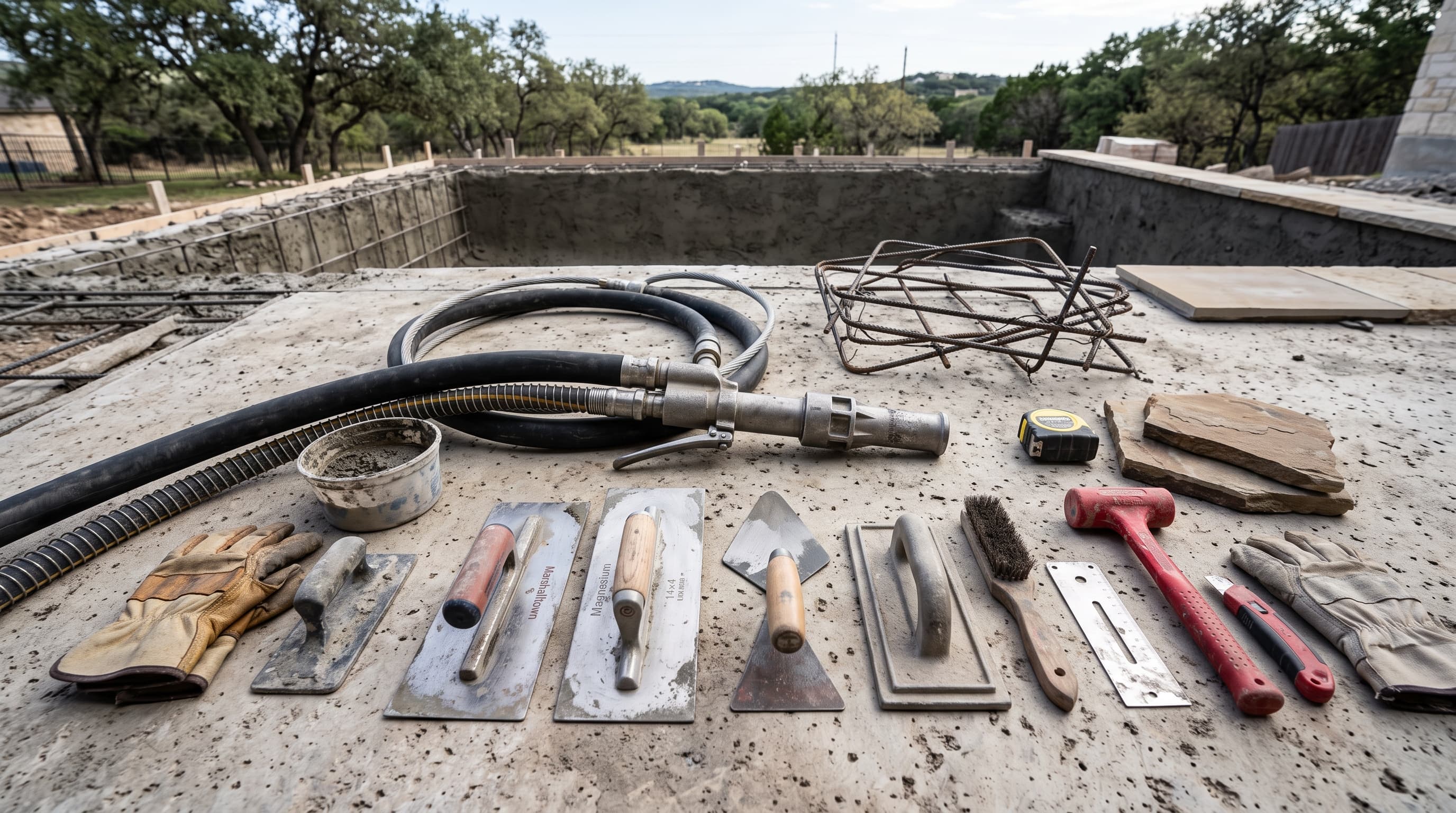
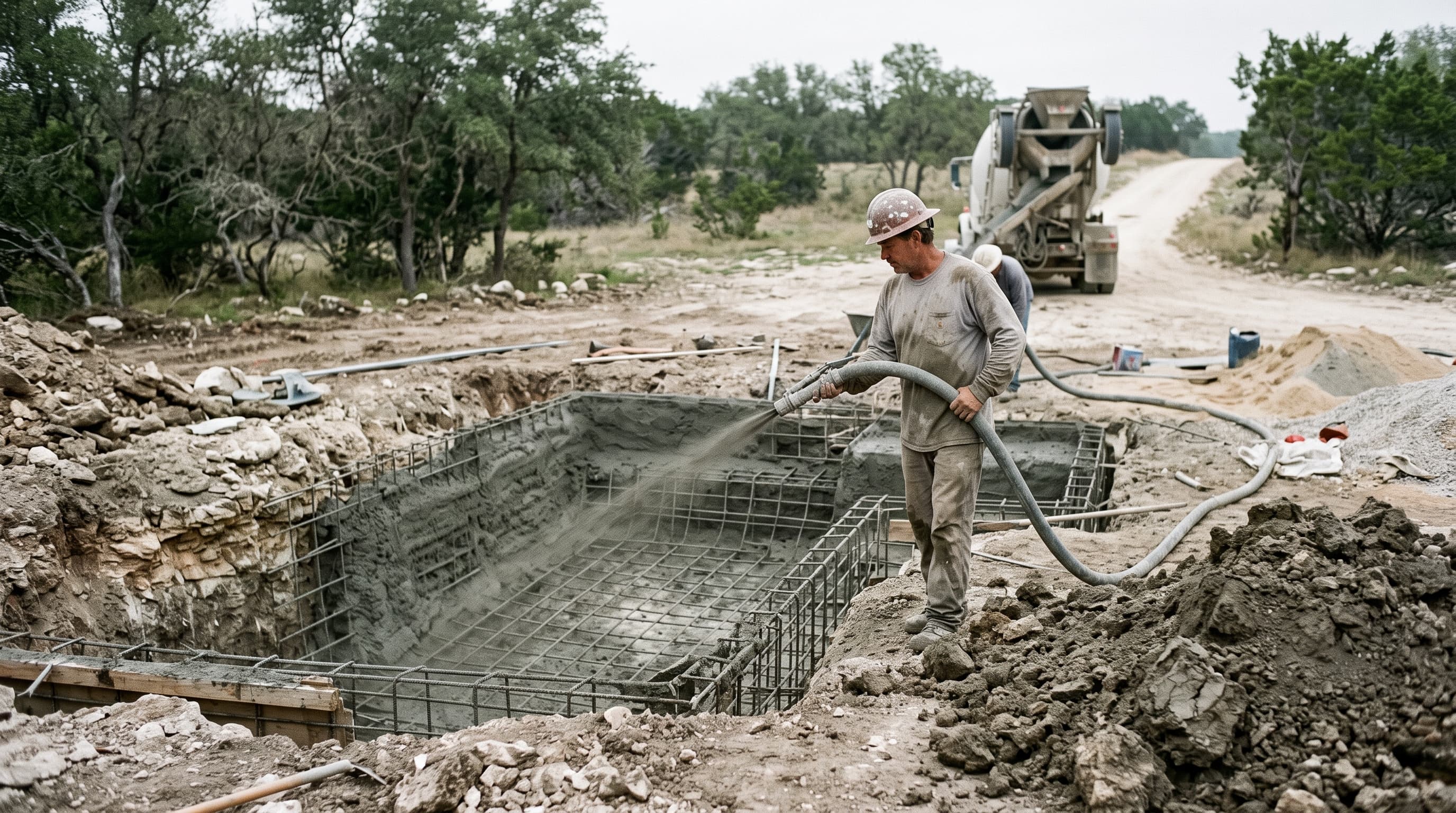
Gunite is a mixture of portland cement and silica sand sprayed through a high-pressure hose over a cage of steel rebar. We do not just dig a hole; we engineer a structure. The steel rebar provides the tension strength, while the concrete provides the compression strength. This creates a reinforced shell that is bonded to the ground.
In Guadalupe County soil, this matters because a gunite pool moves as a single, heavy unit. It does not fight the clay; it resists it through sheer mass and structural reinforcement. While a fiberglass shell sits on top of the soil, a gunite pool is integrated into it. This is why you see custom gunite pools in the Hill Country that have stood for thirty or forty years without shifting an inch.
The limitation of the mold
As we walked the property, the homeowner realized they wanted more than just a rectangle of water. They wanted a tanning ledge that aligned perfectly with their back porch and a deep end that didn't cut into the natural slope of their yard.
This is where fiberglass hits a wall. A fiberglass pool is a mold. You choose from a catalog of shapes: "The Kidney," "The Rectangle," or "The Freeform." If your backyard has a specific grade or if you want a custom depth for a volleyball game, you cannot change the mold. You have to change your yard to fit the pool.
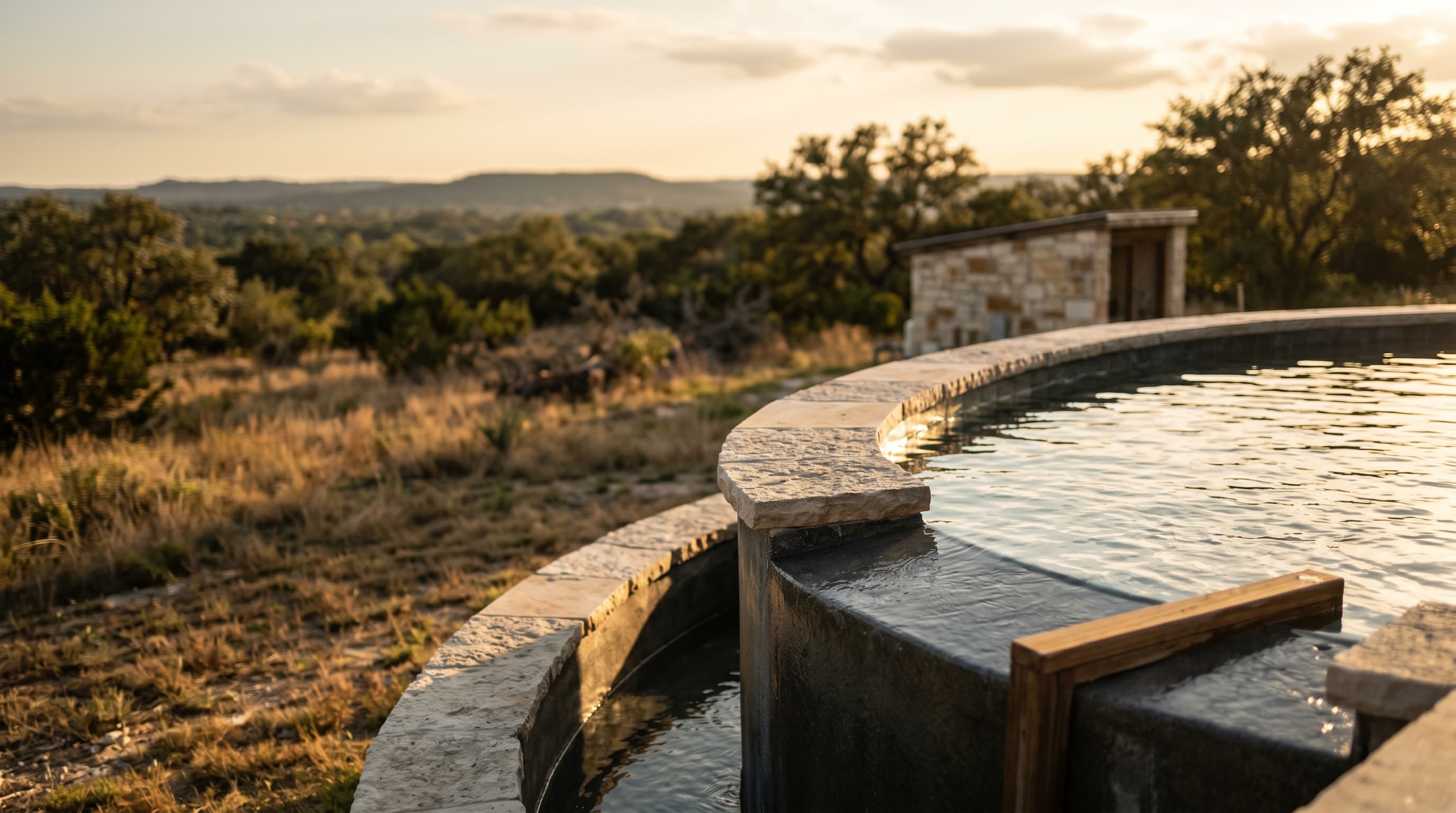
With gunite, we start with a blank canvas. We can carve the pool to follow the natural contours of a Hill Country slope. We can add deep benches, custom steps, or an oversized sun shelf that fits the exact dimensions of your patio furniture. You can see examples of these tailored shapes in our gallery. When you build custom, the pool fits the land, not the other way around.
The honest tradeoff on cost and lifespan
The most common question is always about the money. Fiberglass is almost always cheaper upfront. It requires less labor and fewer materials. For a homeowner who needs a pool today and has a strict budget, that is an attractive offer.
However, there is a difference between a purchase and an investment. A fiberglass shell has a finite lifespan. The gel coat can fade or blister over time, and once a structural crack forms in the fiberglass, it is notoriously difficult to repair permanently.
Gunite is designed for permanence. It is essentially a concrete vault filled with water. While it requires a higher initial investment, the long-term value is significantly higher. A well-built gunite pool increases the property value more effectively because it is viewed as a permanent architectural improvement to the home.
For those trying to figure out where they fit in this price spectrum, we provide a ballpark calculator that gives an honest range without requiring an email address. It helps homeowners see the gap between the "quick" option and the "legacy" option.
Who fits each option
After reviewing the soil and the goals for the backyard, the choice became clear.
Fiberglass is for the homeowner who views a pool as a temporary amenity or someone building on stable, sandy soil where the earth doesn't move. It is for those who prioritize speed over customization and are comfortable with a fixed shape.
Gunite is for the homeowner who intends to stay in their home for a decade or more. It is for the person who wants a specific aesthetic, who has challenging Texas soil, or who wants a pool that can be remodeled or resurfaced thirty years from now to look brand new again.
In the case of the Seguin property, the risk of the expansive clay was too high to justify the short-term savings of fiberglass. They chose to build a reinforced structure that could handle the volatility of Guadalupe County soil.
The lesson is simple: in Central Texas, the dirt dictates the design. If you ignore the soil to save time or money upfront, you are simply deferring a more expensive problem to the future.
What to do next
If you are weighing your options for a new pool in the Hill Country, take these steps before signing a contract:
- * Check your soil type. If you have heavy clay or a steep slope, prioritize structural reinforcement over installation speed.
- * Map your backyard. Decide if you want the pool to fit your life or if you are willing to change your yard to fit a pre-made mold.
- * Run the numbers. Use a cost calculator to see the real difference between materials and decide if the upfront savings of fiberglass outweigh the long-term value of gunite.
- * Look at local work. Visit a gallery of pools built in your specific area to see how they handle the terrain.
If you want to talk about how to handle your specific lot in Seguin or New Braunfels, we are happy to share what we know about the local ground. You can learn more about our process and where we work at our locations page.
When you are ready for a permanent solution, explore our custom gunite pools to see how we build for the long haul.