A pool is more than a hole in the ground with water in it. In Seguin and across the Texas Hill Country, the difference between a lifelong investment and a cracked shell comes down to how you handle the soil and the slope.
The Reality of Texas Soil
The ground beneath your backyard determines the life of your pool. Much of the Seguin area sits on expansive clay. This soil acts like a sponge: it swells when wet and shrinks when dry. If a pool shell is too thin or lacks proper reinforcement, this constant movement creates pressure that leads to structural cracks.
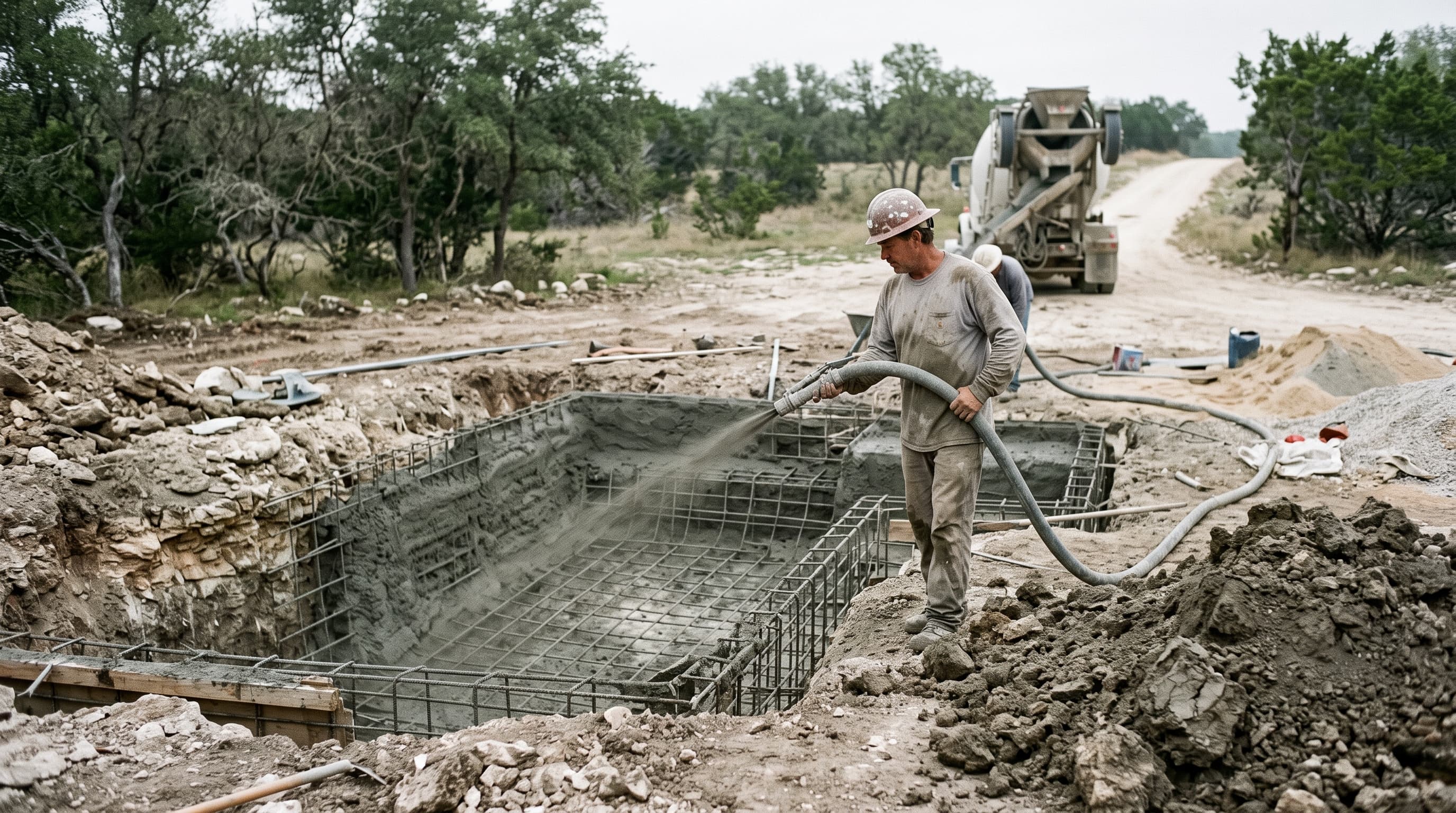
Gunite is the standard for this region because it is essentially poured concrete reinforced with a dense cage of steel rebar. Unlike pre-fabricated shells that can shift or warp under soil pressure, a custom gunite pool becomes part of the landscape. The process involves spraying a mixture of cement and sand at high velocity into the rebar frame. This creates a monolithic structure capable of resisting the shifting nature of Hill Country clay.
Quality construction requires more than just pouring concrete. It requires a deep understanding of how much steel is needed to keep the shell rigid. A builder who cuts corners on the rebar schedule is building a pool that will eventually fail.
Managing Slope and Drainage
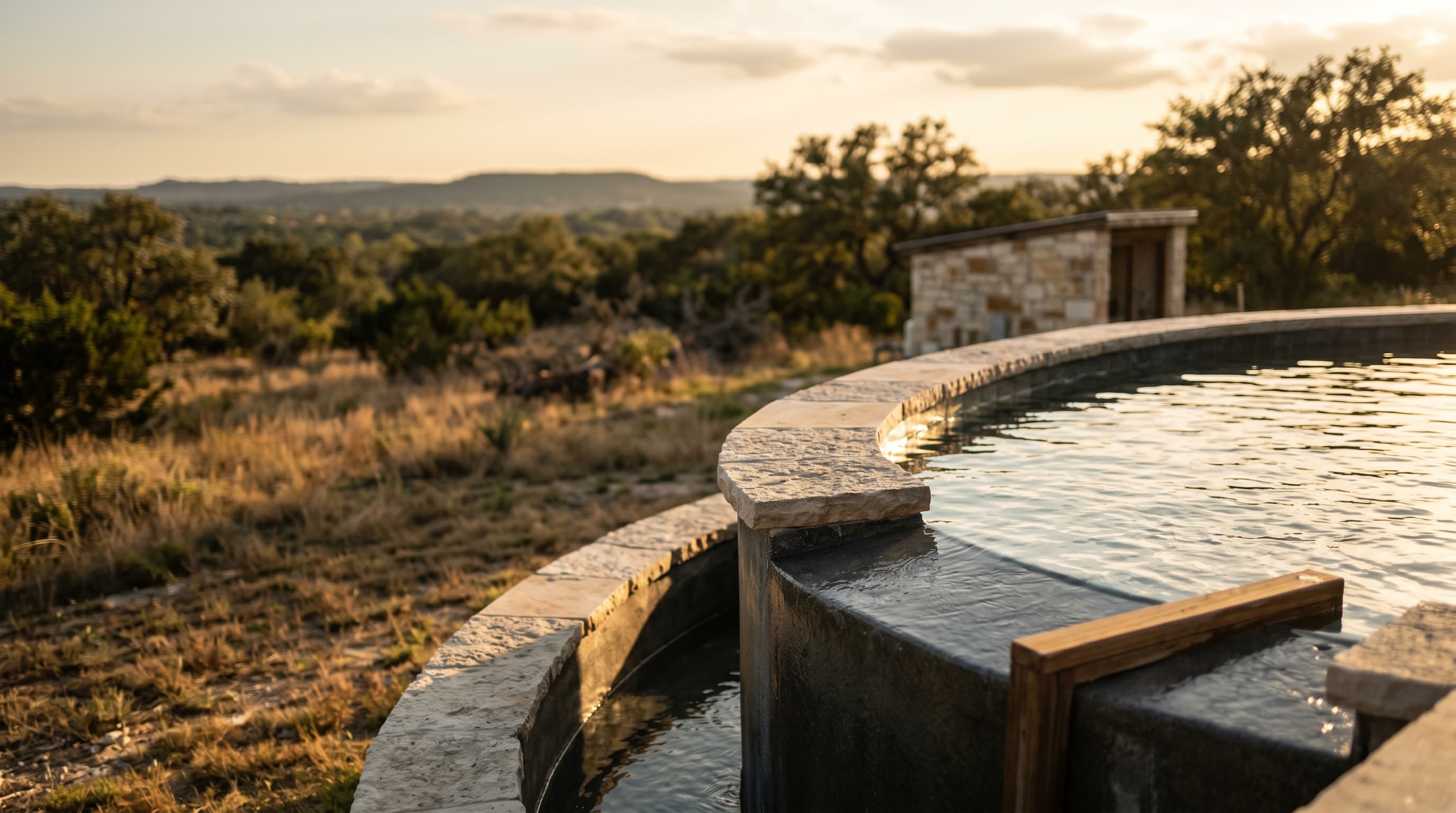
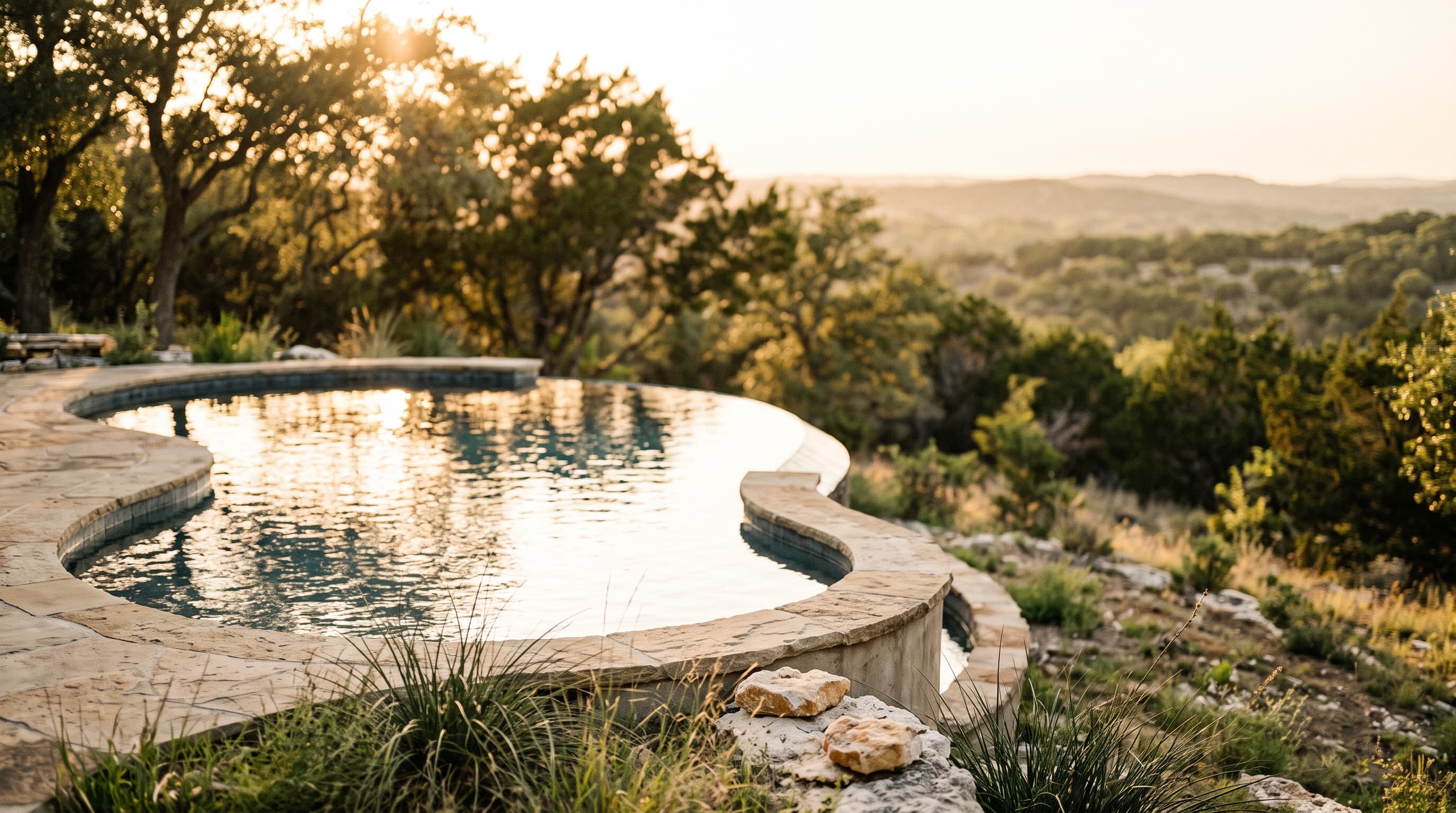
Many lots in New Braunfels and Seguin are not flat. While a slope can be a challenge, it provides an opportunity for design features that flat lots cannot support. An infinity edge or a tiered lounging area allows the pool to follow the natural contour of the land.
The primary concern with sloped lots is drainage. When you replace a permeable patch of grass with a non-permeable concrete shell and decking, you change how water moves across your property. If the grading is off by even an inch, heavy Texas rains can send runoff toward your home's foundation or into your neighbor's yard.
Proper site preparation involves installing dedicated drainage systems before the first shovel hits the dirt. This includes French drains or surface channels that direct water away from the pool shell and the house. A custom build should include a grading plan that respects the natural flow of the land while protecting the structural integrity of the pool.
Choosing Finishes for the Texas Sun
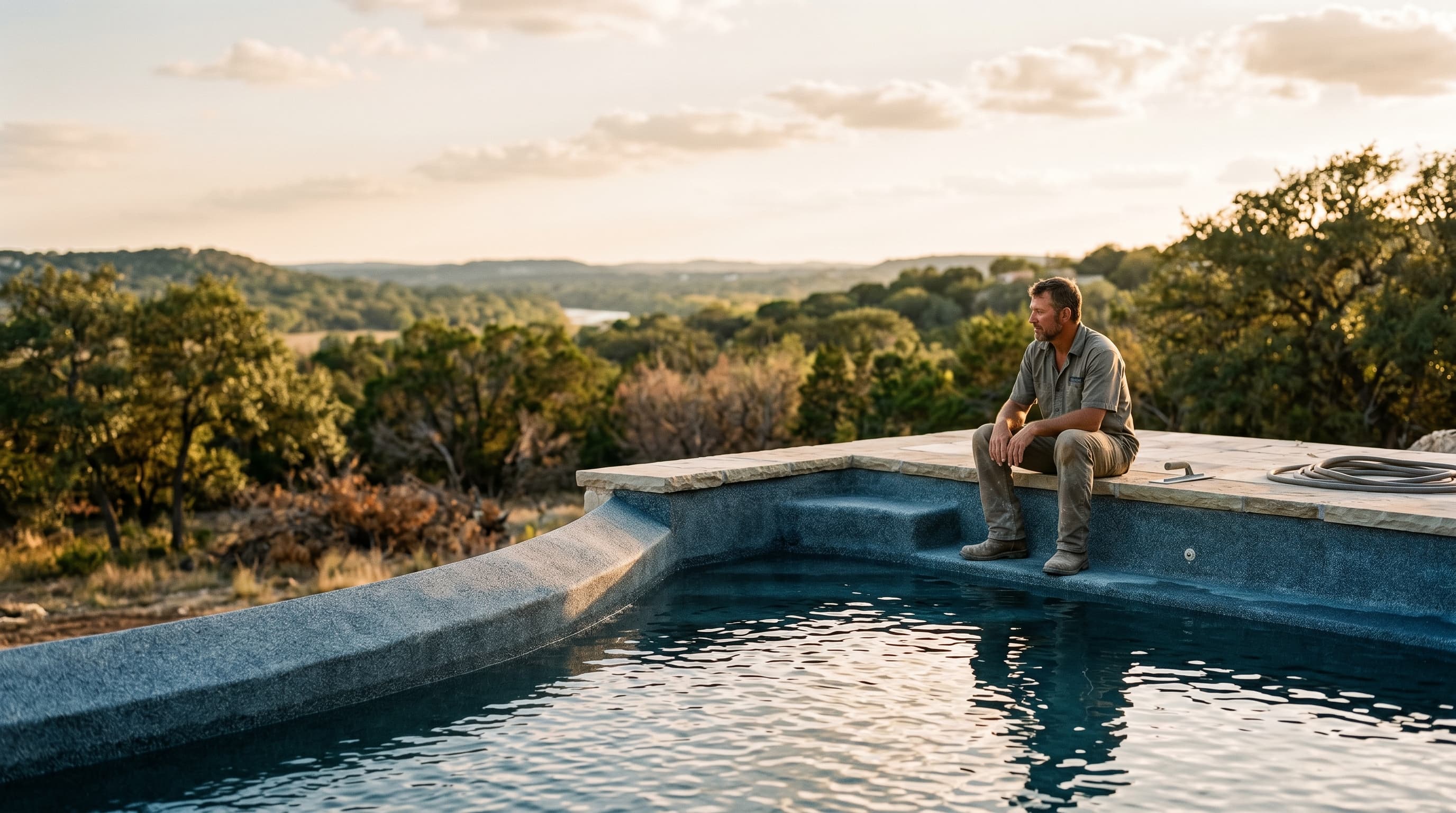
The intensity of the Texas sun affects more than just your skin: it affects the temperature and longevity of your pool finish. Standard white plaster is common, but it can be blinding in the midday sun and wears down faster under high UV exposure.
Pebble finishes are a better choice for the Hill Country. These finishes use small, natural river pebbles embedded in cement. They provide several advantages:
- - Increased durability against chemicals and sunlight.
- - A natural look that blends with the local landscape.
- - Better grip on the steps and benches.
Color choice also impacts water temperature. Darker finishes absorb more heat, which can be a benefit in early spring but can make the water uncomfortably warm during a July heatwave in Seguin. Lighter tones reflect more sunlight, keeping the water cooler. The goal is to find a balance between the aesthetic you want and the thermal reality of the region.
From Blueprint to First Fill
A custom pool build is a sequence of critical milestones. It begins with a site survey to identify utility lines and property boundaries. Once the layout is marked, the excavation team removes the earth to the precise depth required for the design.
The steel phase is where the structural integrity is decided. The rebar cage must be tied tightly and elevated off the ground so the gunite can fully encase the steel. If the steel touches the dirt, it will rust and cause spalling in the concrete.
After the gunite is shot and cured, plumbing is installed for the filtration system. We prioritize high-efficiency pumps and salt-water systems because they are easier for homeowners to maintain over time. The final step is the finish application and the fill. Filling a pool too quickly can create air pockets or uneven settling, so a slow, controlled fill is essential for a perfect finish.
What to do next
If you are planning a backyard build, start with these steps:
- - Map your property lines and identify where your main water and electric lines enter the house.
- - Observe how water drains across your yard during a heavy rain to identify low spots.
- - Decide if you want a traditional pool or features like an infinity edge based on your lot's slope.
- - List the primary uses for the pool (lap swimming, kids playing, or entertaining) to guide the depth and shape.
If you have questions about how your specific lot will handle a gunite build, we are happy to talk through the details. We build custom pools across Seguin and New Braunfels that are designed to last as long as the home they belong to. Reach out to Turner Custom Pools to discuss your project.